● live

Daily Standup Board
One card per person per day: yesterday, today, blockers.
- Started
- Sep 2026
- Version
- v1.18
- Commits
- ~930
- Next.js 16
- React 19
- Tailwind 4
- Cloudflare Workers
- D1
- Durable Objects
- anime.js
- three.js
- Playwright
- Storybook
What it is
Daily is a standup board I built for my team at work. Every person gets one row per day with three fields: what they did yesterday, what they're doing today, and what's blocking them. The whole team fits on one screen, and the board is meant to sit open on a second monitor all day, refreshing itself.
Standups often live in a spreadsheet before an app like this, so Daily respects that: an admin can import the history from a Google Sheet, and export the board back in the same shape, so a round trip changes nothing.
How it works for the team
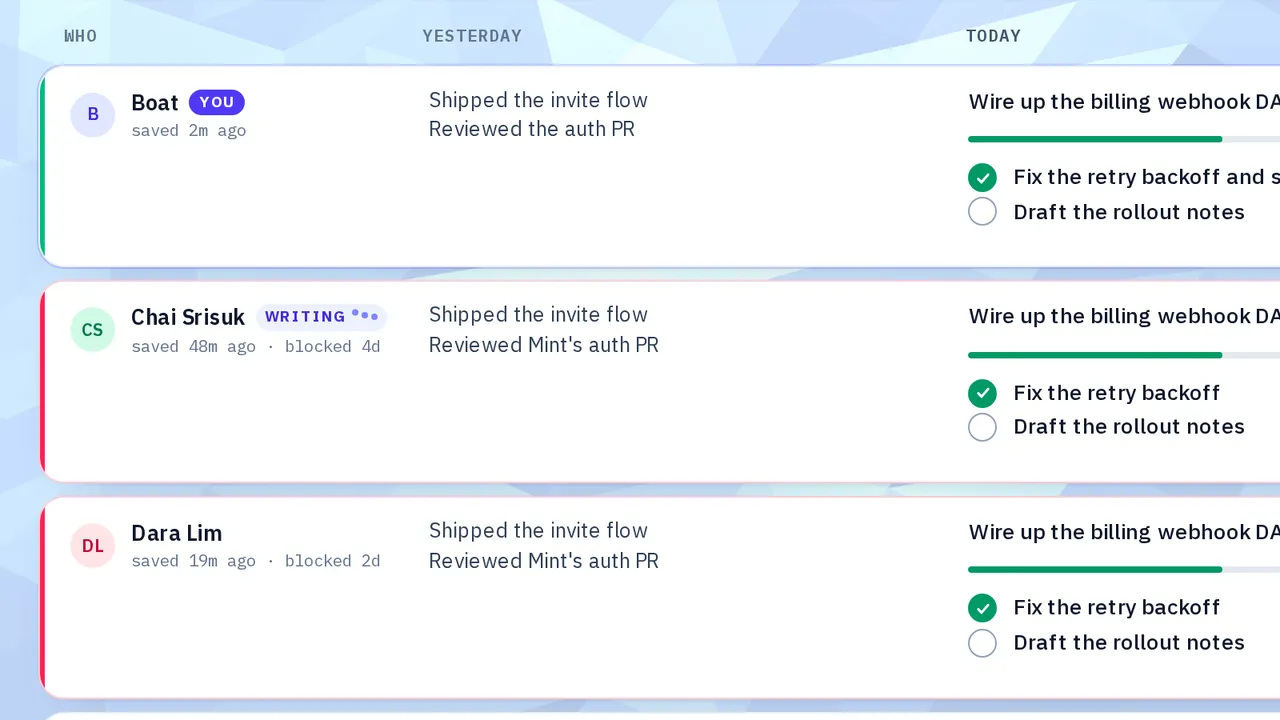
The board is a list, not a card grid. Rows run posted-first, then the people who still owe an update, then anyone who's away. Your own empty row is a "Write your update" button. An unresolved blocker turns a row's edge rose, and it ages over consecutive posting days, so a weekend or someone's leave doesn't make it look older than it is. Marking it resolved turns the row green and stops the count.
Updates are written in a small markdown subset: bullets, bold, code, links, @mentions, checklists and Jira keys. Unfinished checklist items can be carried over into today with one click. People react, comment and mention each other, and a notification bell (plus an optional evening email) collects what they missed.
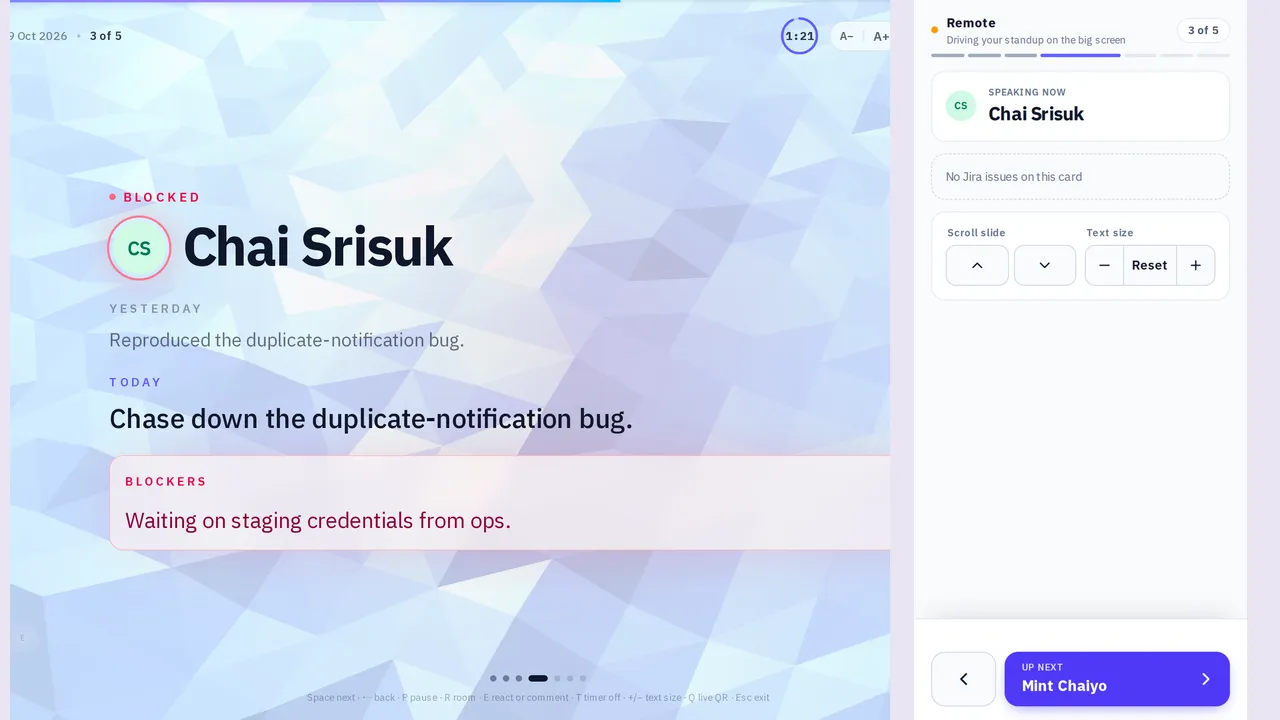
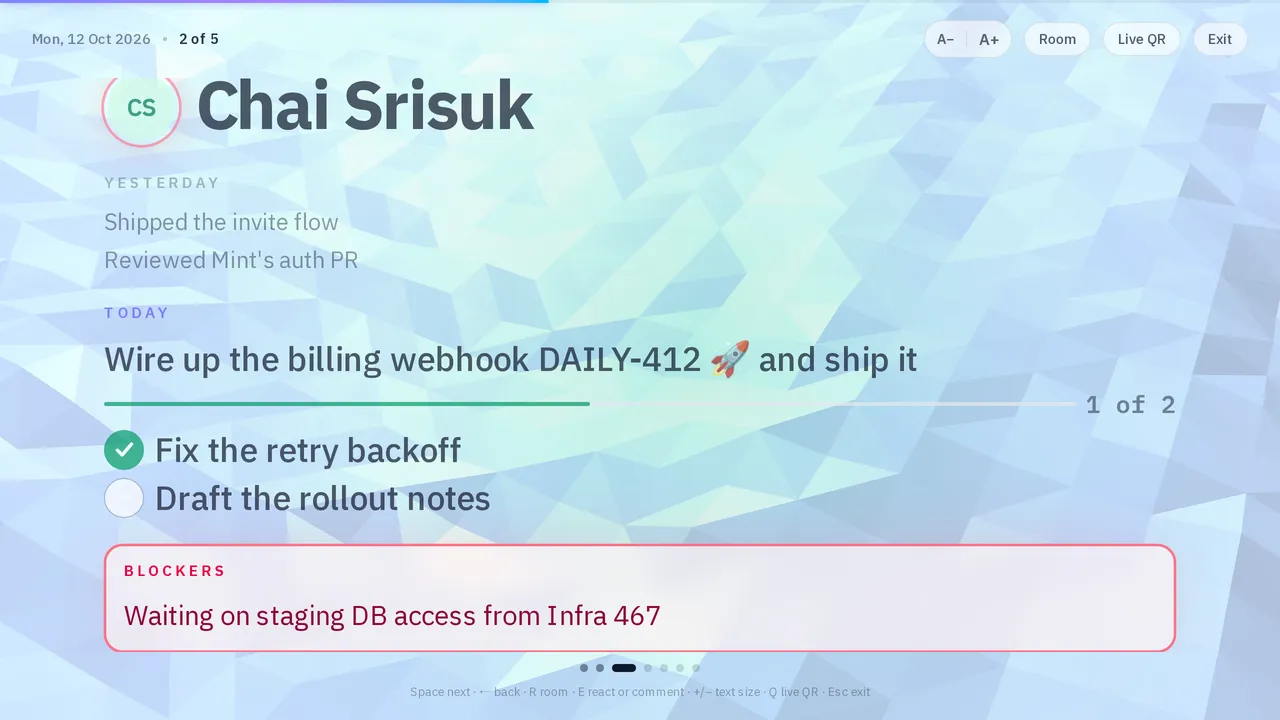
Then there's the meeting. Meeting mode turns the board into slides, one person at a time, in the team's pinned order, with a 90-second timer, and it ends on a recap of the open blockers. Pressing Q shows a QR code. Anyone in the room can scan it and follow along on their phone, read-only, without an account, and react or comment on whoever is speaking. It lands on the projector straight away.
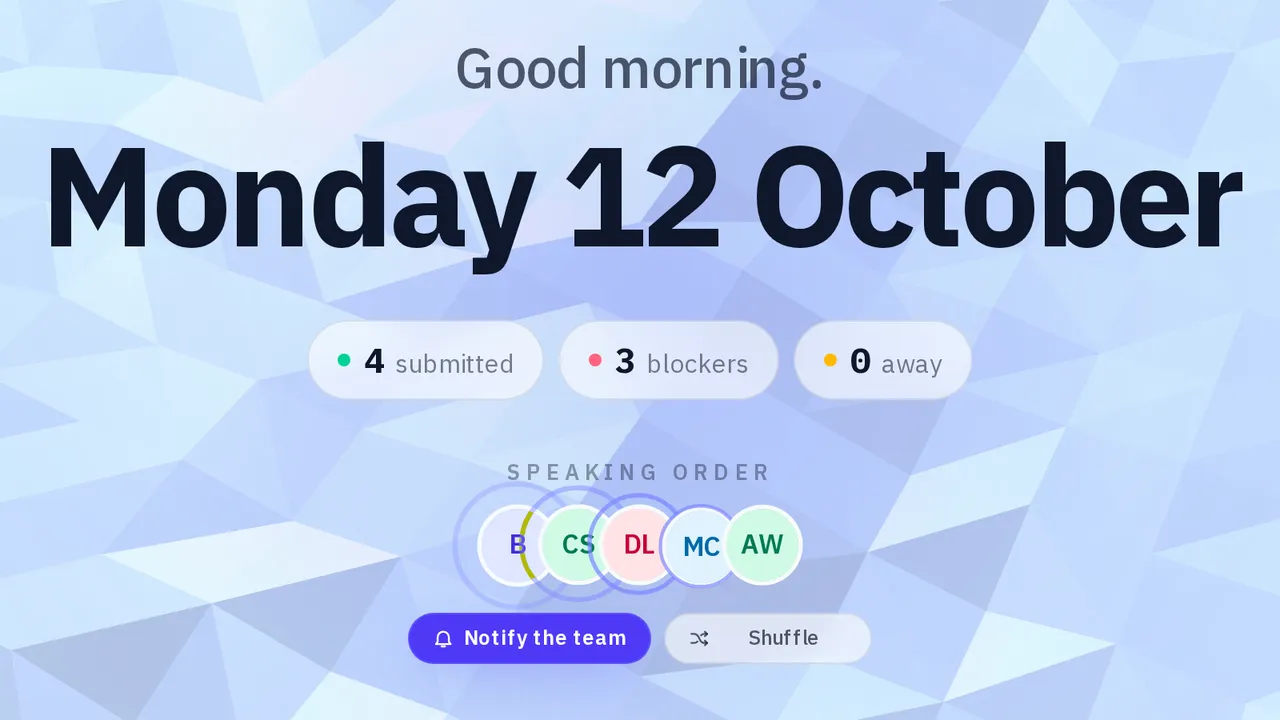
Around that core it grew the things a team actually asks for: out-of-office that drops you from the "who's missing" count, Thai public holidays, a week grid, participation stats, a QA template for testers (resolved, new and failed tickets over the same three columns), a Ctrl/⌘+K palette with search, a Jira integration that turns issue keys into previews, a timeline of who worked on what, and Sentry highlights in the meeting. Each person can pick an animated background for their board.
Decisions I'd make again
Answer the polls before Next.js wakes up
Daily runs on Cloudflare Workers through OpenNext, on the Free plan, which gives a request 10 ms of CPU. Every open board polls every 15 seconds (every 3 during a meeting), and the bell every 30. Going through Next cost most of the budget before any handler ran: in production, warm board polls took about 13 ms and bell polls about 8 ms, and Cloudflare kills an isolate that keeps going over.
So the Worker's own entry point answers those few GET requests itself, before OpenNext loads. The handlers are the same functions the Next routes call, so the two paths can't drift, and next dev still uses the normal routes. The board also sends a version fingerprint of everything visible, so a poll that finds nothing new gets a tiny "unchanged" reply and the page skips the re-render.
A Durable Object that only says "something changed"
The live meeting view uses one Durable Object per session. Every phone and the projector hold a hibernating WebSocket to it, and when someone reacts or the host moves to the next slide, the API writes to D1 first and then asks the object to broadcast. The object stores nothing. D1 stays the single source of truth, so a dropped socket only costs speed: the clients fall back to polling and catch up.
The socket itself can't go through Next at all (a 101 upgrade is a Workers-level response), so the entry point routes /live connections straight to the object.
Keep the board calm while it refreshes
A board that refreshes itself is easy to get wrong. Polling pauses while the tab is hidden. It never overwrites a field you're editing, and unsaved text is mirrored to localStorage so a closed tab doesn't lose it. Markdown renders as React nodes instead of HTML, so there's no injection surface in anyone's update.
Work inside the Free plan's limits on purpose
The scheduled jobs run as separate cron invocations because the Free plan caps one at 50 subrequests, and the nightly reconcile alone can use 45. Sentry highlights are cached per team for five minutes and refreshed under a lease, so only one request fetches at a time and a stale copy shows while Sentry is rate-limiting. One gotcha worth writing down: deployed Workers refuse PBKDF2 above 100,000 iterations, while local dev and Node accept more, so a "stronger" password hash would have locked everyone out only in production.
How it's kept honest
Daily is a real app with accounts, invites, roles and multiple teams, so it's tested like one. The last audit pass counted about 4,230 unit and component tests across node, DOM and Storybook projects, plus a Playwright suite that runs against the built Worker with the Durable Object. The schema is plain D1 migrations, never edited once applied. Releases are cut by hand with semver, and each one adds a "What's new" note that people see the next time they open the board.
More screens · 4
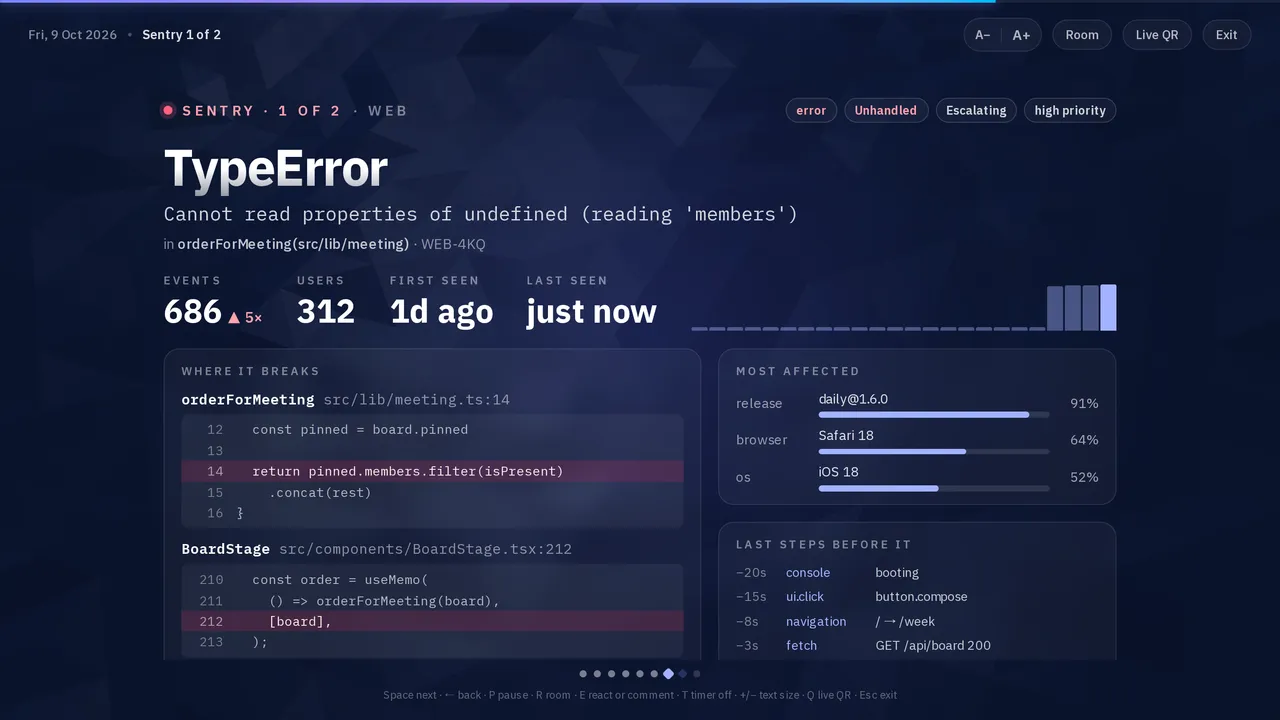
A Sentry highlights slide in meeting mode 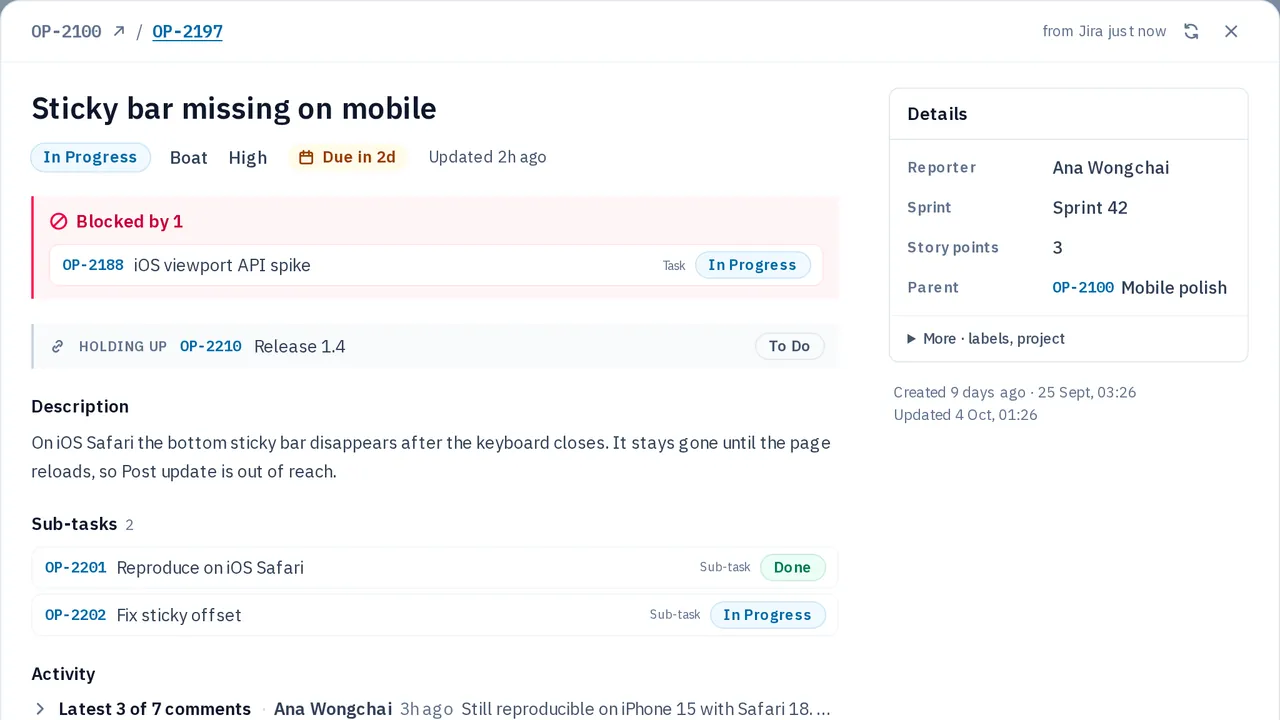
A Jira issue preview opened from a standup update 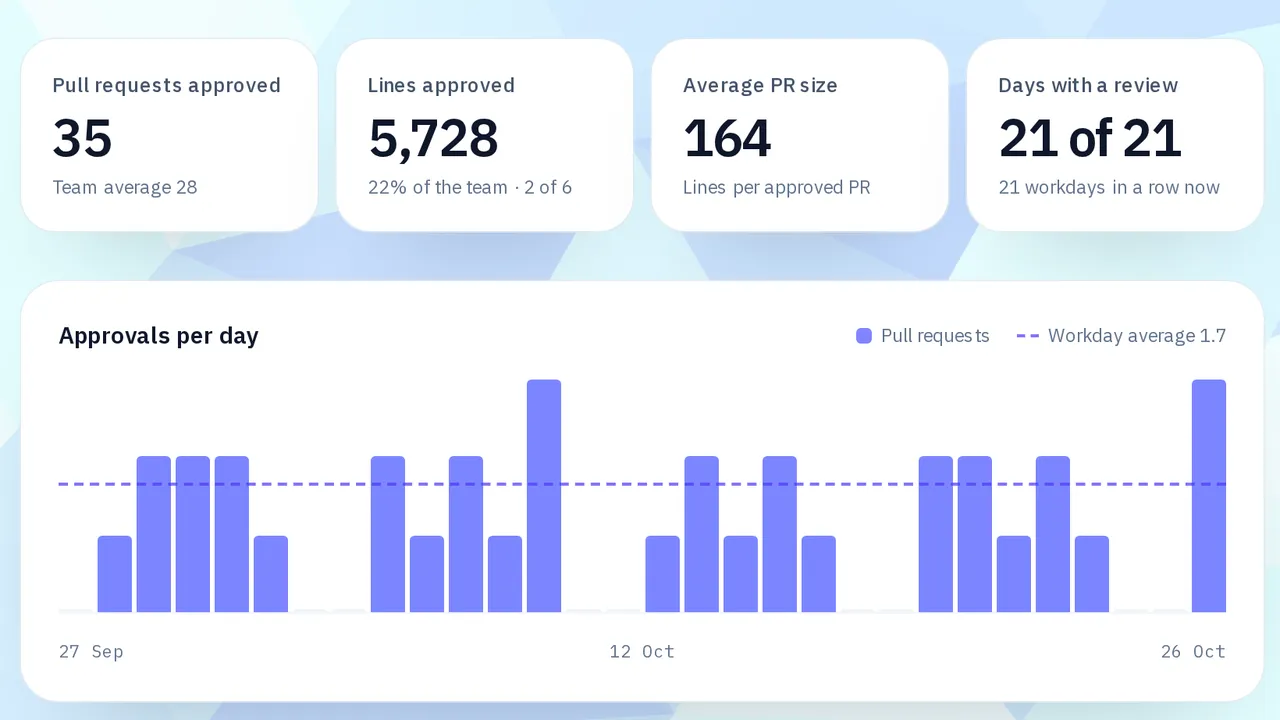
Code-review statistics for the team 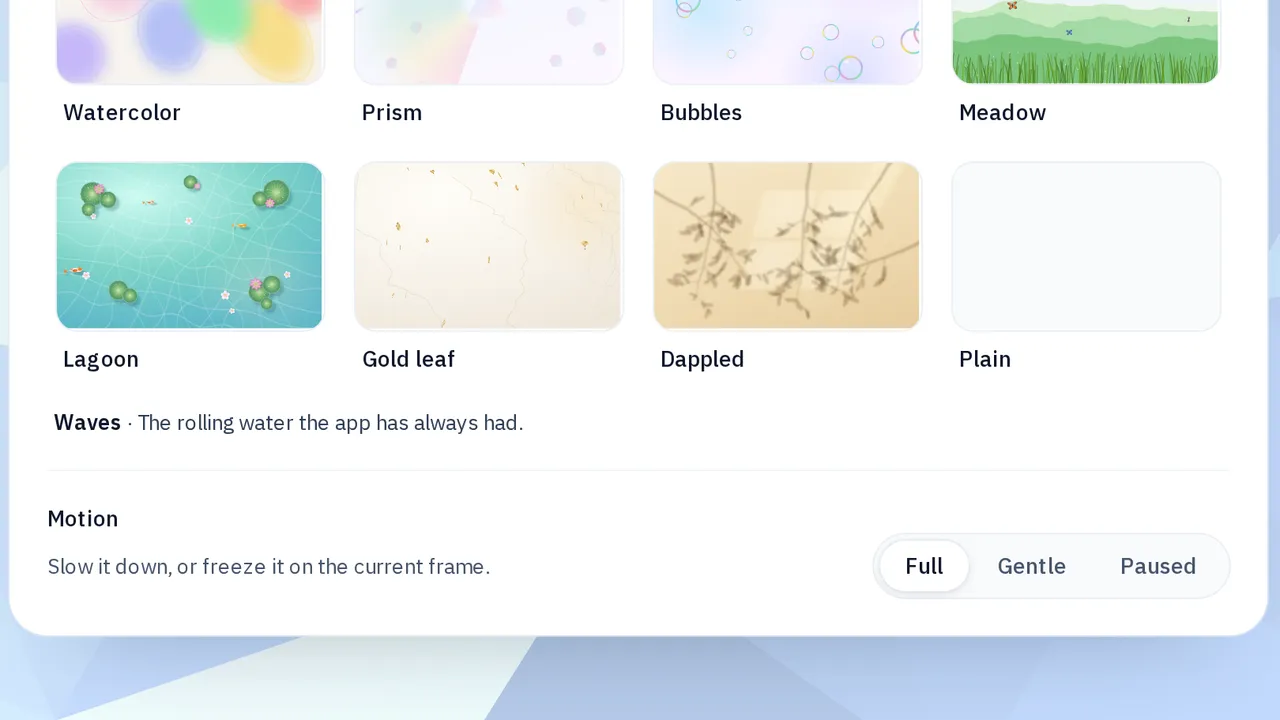
The animated background and motion picker